
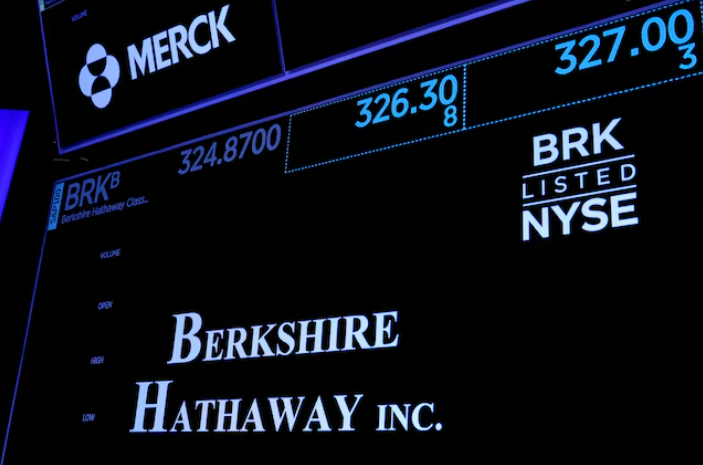
Over the past few years, an interesting question has quietly emerged among long-term investors: Is Berkshire Hathaway gradually evolving into a Western version of a Japanese trading house?
At first, the comparison sounds unusual. Berkshire Hathaway, based in Omaha, and Japan’s sogo shosha operate in very different cultural and economic environments. Yet when looking closely at structure, capital allocation, and long-term intent, the similarities become increasingly difficult to ignore.
This article explores that idea — not as a prediction, but as a framework for understanding Berkshire’s long-term strategy in a changing global market.
What Are Japanese Trading Houses (Sogo Shosha)?
Japanese trading houses such as Mitsubishi Corporation, Mitsui & Co., Itochu, Marubeni, and Sumitomo are diversified investment and operating companies with global reach. They typically share several defining characteristics:
- Ownership stakes across many industries: From energy and metals to food and textiles.
- Long-term investment horizons: Planning in decades rather than quarters.
- Conservative balance sheets: A focus on durability over aggressive leverage.
- Steady cash flow: Prioritizing consistent earnings over rapid, volatile growth.
- Partnerships: Acting as enablers and co-investors rather than seeking full operational control.
A Brief History and Transformation
Japanese trading houses did not start as the diversified investment groups they are today. Historically, they emerged as intermediaries for Japan’s industrialization, handling the import of raw materials and the export of finished goods. Their original role was transactional: sourcing, logistics, and trade finance.
Over time, this model proved vulnerable. Margin pressure and cyclical commodity markets forced a transformation. Beginning in the late 20th century, the major trading houses shifted their focus:
- From pure trading to ownership stakes.
- From volume-driven deals to capital allocation.
- From short-term margins to long-term cash flows.
Today’s sogo shosha are better understood as diversified investment platforms. This evolution — from transactional middlemen to patient owners — is precisely what makes comparisons with Berkshire Hathaway increasingly relevant.
The Evolution of Berkshire Hathaway’s Investment Philosophy
Berkshire Hathaway’s philosophy is often described as static — value investing, discipline, patience. In reality, it has evolved continuously, shaped by scale and market conditions.
The Scaling Challenge
In its early decades, Berkshire could acquire high-quality public companies at attractive valuations. However, as Berkshire grew, the size of deployable capital became a limitation. Large amounts of capital require large opportunities, and public markets — especially during periods of elevated valuations — increasingly struggled to offer them.
Capital Allocation in High-Valuation Markets
In an environment of high equity prices, Berkshire has faced a familiar dilemma: attractive businesses exist, but expected returns often fall below required hurdle rates. This discipline has led to the accumulation of massive cash reserves. Management’s response has been a greater focus on private companies and controlled subsidiaries (e.g., OxyChem, Alleghany, and BNSF).
These investments offer:
- Full control over capital allocation.
- Stable, internally generated cash flows.
- Insulation from public market sentiment and daily price validation.
The Japan Connection: More Than Just a Stock Pick
In 2020, Berkshire disclosed investments in five major Japanese trading houses. As of 2026, these positions have been increased, signaling a high level of conviction. However, three specific factors elevate these investments from “passive trades” to a “strategic shift.”
1. The Financial “Masterstroke”: Yen-Denominated Bonds
One of the most overlooked aspects of Berkshire’s Japan strategy is how it was financed. Berkshire issued Yen-denominated bonds to fund these purchases.
- The Result: By borrowing in Yen at near-zero interest rates to buy stocks yielding 5% or more in dividends, Berkshire created a massive, low-risk “carry trade.”
- Currency Hedge: This also removed the risk of a weakening Yen, as both the assets and the liabilities are denominated in the same currency. This level of financial engineering is a hallmark of the sogo shosha approach to global arbitrage.
2. The Focus on the “Real Economy” and Commodities
Just like the sogo shosha, which are backbone providers of energy, minerals, and food, Berkshire has pivoted toward the “real economy.” The heavy investment in Berkshire Hathaway Energy (BHE) and the increased stake in Occidental Petroleum mirror the Japanese trading houses’ dominance in LNG, copper, and industrial materials. Both entities are betting that in an inflationary or volatile world, owning physical infrastructure and essential resources is the ultimate long-term hedge.
3. Relational Capital and Cultural Alignment
In Japan, business is built on Shinryo (trust). When Warren Buffett visited Tokyo to meet the leaders of these houses, it was a cultural signal. Management has emphasized that these are not short-term trades but multi-decade partnerships. Berkshire has indicated it is open to future joint deals alongside these houses, provided they meet a minimum expected return of around 10% IRR.
Leadership Continuity: Greg Abel’s Strategy
As of January 1, 2026, Greg Abel is the CEO of Berkshire Hathaway. Abel has been instrumental in shaping the non-insurance operations and the approach to Japan. Under his leadership, Berkshire has reinforced the “Partnership Model”:
- Decentralized Decision-Making: Mirroring the autonomy given to sogo shosha subsidiaries.
- Disciplined Allocation: Maintaining the 10% IRR hurdle rate even in joint ventures.
- Collaboration: Moving from a passive investor to a global partner that can co-invest in infrastructure projects worldwide.
Conclusion: Continuity Rather Than Reinvention
Berkshire’s core philosophy remains intact: discipline, long-term economics, and durable advantages. What has changed is the application.
The increasing emphasis on private businesses, global partnerships, and “real economy” assets reflects an adaptation to scale. Berkshire is no longer just a “stock picker”—it has become a global, diversified infrastructure and investment platform.
In this sense, Berkshire’s evolution mirrors that of the Japanese trading houses: moving away from transactional opportunities toward an ownership model designed to compound quietly and durably over decades. Berkshire Hathaway has become, for all intents and purposes, the first truly global, Western Sogo Shosha.
Hi, this is a comment.
To get started with moderating, editing, and deleting comments, please visit the Comments screen in the dashboard.
Commenter avatars come from Gravatar.
nice 👍